

Safe Removal and Cleanup Starts With a Careful Inspection
Storm-damaged trees can break fast, lean without warning, or drop heavy limbs hours after the wind stops. A tree cutting service for storm damaged trees helps remove broken parts, lower the risk around people and homes, and clear the way for repairs. In Santa Rosa, CA, the safest first step is to stay back, check for power lines, and have the tree looked at before any cutting begins.
Quick Diagnosis Summary
Not all storm damage looks the same. Some trees lose small branches and recover well. Others split at the trunk, lift at the roots, or hang over a roof. Those cases often need fast action. A tree cutting service can tell the difference between a tree that can be trimmed and one that should come down. This kind of work is part of tree cutting service after strong wind, heavy rain, ice, or lightning.
Common Symptoms
Storm damage often leaves clear warning signs. Some are easy to spot from the ground. Others show up a day or two later as the tree shifts.
- Large cracked limbs hanging in the canopy
- A trunk split down the middle
- Fresh leaning after the storm
- Roots lifting out of the soil
- Branches resting on a roof, fence, or car
- Broken tops or twisted main stems
- Limbs close to utility lines
- Bark stripped away by wind or impact
If a tree shows one or more of these signs, keep people and pets away. Even a branch that looks stuck can fall with no warning.
Likely Causes
Storm damage happens for many reasons. High wind is the obvious one, but weak spots often start long before the storm. A tree may have decay inside the trunk, poor branch structure, shallow roots, or soil that stays too wet. Ice can add extra weight. Lightning can split wood and dry out part of the tree. In some yards, past pruning cuts heal badly and create weak attachment points.
Tree type matters too. Fast-growing trees may break more easily. Older trees may have hidden hollow areas. When the ground gets soaked, even a healthy tree can lean if the root hold is weak.
What to Check First
Before anyone starts cleanup, look at the area and think about safety. Do not rush in with a saw. A damaged tree can store pressure in the wood, and that pressure can release during a cut.
- Stay back and scan the full tree from a distance.
- Check for downed or nearby power lines.
- Look for hanging limbs over walkways or driveways.
- See if the trunk is cracked or the roots are lifting.
- Notice what the tree could hit if it falls more.
- Take photos for records before work begins.
If wires are involved, call the utility company right away and keep clear. If the tree is on a home, garage, or car, that often means pro-level removal is the safer path.
Safe Fixes Vs Pro-Level Fixes
Some light cleanup can be done safely from the ground. Small twigs and loose brush in the yard are usually fine to pick up. A few small branches that already fell can be moved aside. That said, cutting storm-damaged wood is very different from normal yard work.
Safer small tasks may include removing loose debris, marking off the area, and checking for new cracks after wind dies down. A homeowner should not climb a ladder into a damaged tree, pull on hanging limbs, or cut wood under strain. Those actions can lead to sudden movement and serious injury.
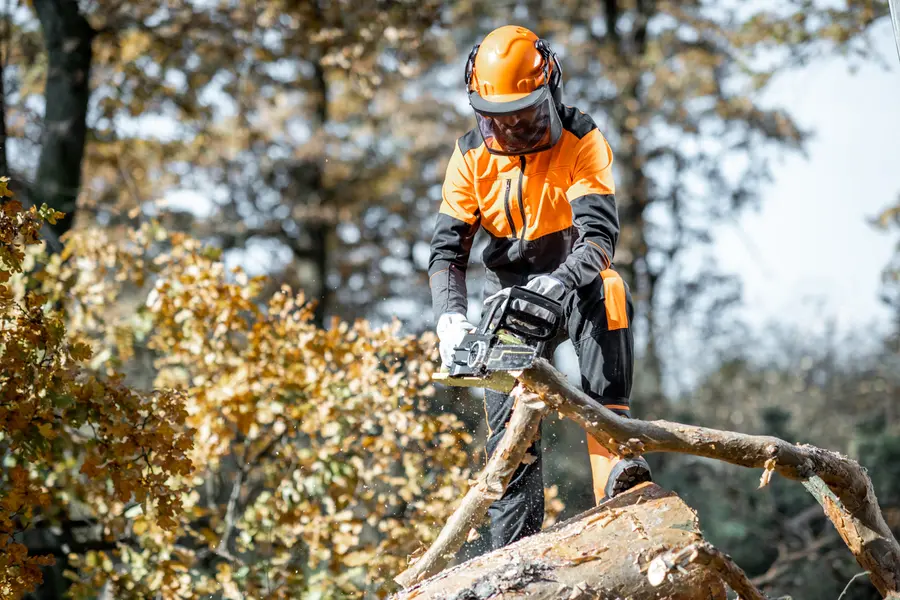
Call a tree cutting service when the tree is large, near structures, tangled with other limbs, or partly uprooted. Professional crews use ropes, saw control methods, and equipment to bring sections down in a planned way. If a crane, rigging, or traffic control is needed, the job is not a do-it-yourself project.
Prevention Tips
You cannot stop every storm problem, but you can lower the risk. Trees do better in bad weather when they are checked and cared for before storm season. Regular pruning helps remove weak limbs and improve branch spacing. Deep root care and mulch can support tree health. Watching for decay, fungus, dead wood, and cracks can catch problems early.
Helpful prevention steps include yearly inspections, trimming branches away from roofs, and removing trees that are already in decline. After one storm, it is smart to look at nearby trees too. If one failed, others on the same property may have similar weak points.
Common Mistakes to Avoid After a Storm
People often make fast choices because they want the yard cleared right away. That can make the job more dangerous.
- Cutting a hanging branch from directly below
- Using a ladder on wet or uneven ground
- Trying to pull a limb down with a rope
- Ignoring a small trunk crack that may spread
- Starting work before checking for utility hazards
- Saving a tree that is too damaged to recover
A careful plan is better than a fast guess. The goal is not just cleanup. The goal is safe cleanup.
Final Recommendation
If a storm-damaged tree has broken limbs, a split trunk, root lift, or any contact with a structure, it is smart to get expert help. In Santa Rosa, CA, storm cleanup often needs a close look at wind damage, soil movement, and nearby hazards before cutting starts. Contact us at (707) 907-1848 to speak with the team at Alcazar Tree Service LLC about safe next steps, whether the tree needs trimming, removal, or a full site cleanup.